

Non-Alcoholic Beer Market 2026 Health-Conscious Consumer Preferences Supporting Market Expansion
Non-Alcoholic Beer Market Scope

Non-Alcoholic Beer Market Statistics
Non-Alcoholic Beer Market Analysis
The Business Research Company's Non-Alcoholic Beer Market Report 2026 – Market Size, Trends, And Global Forecast 2026-2035
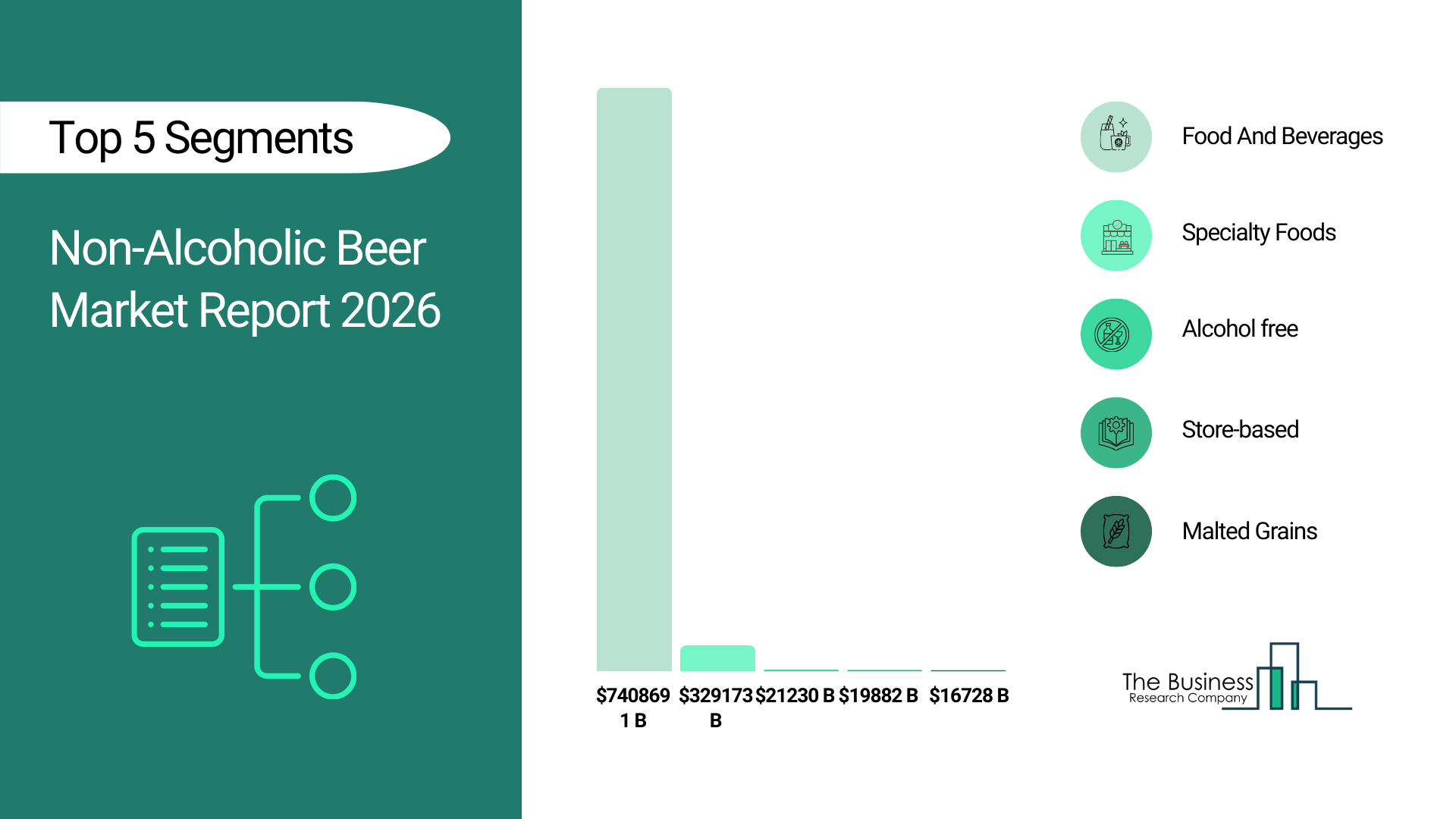
LONDON, GREATER LONDON, UNITED KINGDOM, March 18, 2026 /EINPresswire.com/ -- Non-Alcoholic Beer Market to Surpass $39 billion in 2030. In comparison, the Specialty Foods market, which is considered as its parent market, is expected to be approximately $508 billion by 2030, with Non-Alcoholic Beer to represent around 8% of the parent market. Within the broader Food And Beverages industry, which is expected to be $9,313 billion by 2030, the Non-Alcoholic Beer market is estimated to account for nearly 0.4% of the total market value.
Which Will Be the Biggest Region in the Non-Alcoholic Beer Market Growth in 2030
Asia Pacific will be the largest region in the non-alcoholic beer market in 2030, valued at $11,732 million The market is expected to grow from $6,754 million in 2025 at a compound annual growth rate (CAGR) of 12%. The rapid growth can be attributed to the rising awareness of diseases caused due to alcoholic beverages and expanding e-commerce.
Which Will Be The Largest Country In The Global Non-Alcoholic Beer Market In 2030?
The USA will be the largest country in the non-alcoholic beer market in 2030, valued at $9,169 million The market is expected to grow from $5,931 million in 2025 at a compound annual growth rate (CAGR) of 9%. The strong growth can be attributed to the rising awareness of diseases caused due to alcoholic beverages and expanding e-commerce.
Request a free sample of the Non-Alcoholic Beer Market report:
https://www.thebusinessresearchcompany.com/sample_request?id=5226&type=smp&utm_source=EINPresswire&utm_medium=Paid&utm_campaign=Mar_PR
What will be Largest Segment in the Non-Alcoholic Beer Market in 2030?
The non-alcoholic beer market is segmented by product into alcohol-free and low alcohol. The alcohol-free will be the largest segment of the non-alcoholic beer market segmented by type, accounting for 82% or $31,576 million of the total in 2030. The alcohol-free market will be supported by rising health consciousness, increasing awareness of alcohol-related diseases, stricter drink-driving regulations, higher participation in sports and fitness activities, expanding consumption in workplace and daytime occasions, strong appeal among younger and health-focused consumers and growing acceptance of sober and mindful drinking habits.
The non-alcoholic beer market is segmented by material into malted grains, hops, yeasts, enzymes and other materials. The malted grains market will be the largest segment of non-alcoholic beer market segmented by application, accounting for 63% or $24,340 million of the total in 2030. The malted grains market will be supported by consumer expectations for authentic brewing ingredients, increasing demand for quality and consistency in alcohol-free formulations, reliance on grains for body and texture retention, compatibility with both alcohol-free and low-alcohol production, supply availability across major brewing regions, established brewing practices and the need to preserve traditional beer flavor and mouthfeel.
The non-alcoholic beer market is segmented by category into plain and flavored. The flavored market will be the largest segment of the non-alcoholic beer market segmented by end users, accounting for 61% or $23373 million of the total in 2030. The flavored market will be supported by masking of residual fermentation notes, appeal to first-time and occasional consumers, crossover interest from soft drinks and functional beverages, seasonal and limited-edition launches, premium differentiation and younger consumer experimentation and demand for variety and novelty.
The non-alcoholic beer market is segmented by distribution channel into store-based and non-store-based. The store-based market will be the largest segment of the non-alcoholic beer market segmented by end users, accounting for 74% or $28465 million of the total in 2030. The store-based market will be supported by strong supermarket and convenience store presence, impulse purchasing behavior, visibility alongside traditional beer, promotional activities, growing shelf allocation for alcohol-free products, and expanded retail availability.
What is the expected CAGR for the Non-Alcoholic Beer Market leading up to 2030?
The expected CAGR for the non-alcoholic beer market leading up to 2030 is 9%.
What Will Be The Growth Driving Factors In The Global Non-Alcoholic Beer Market In The Forecast Period?
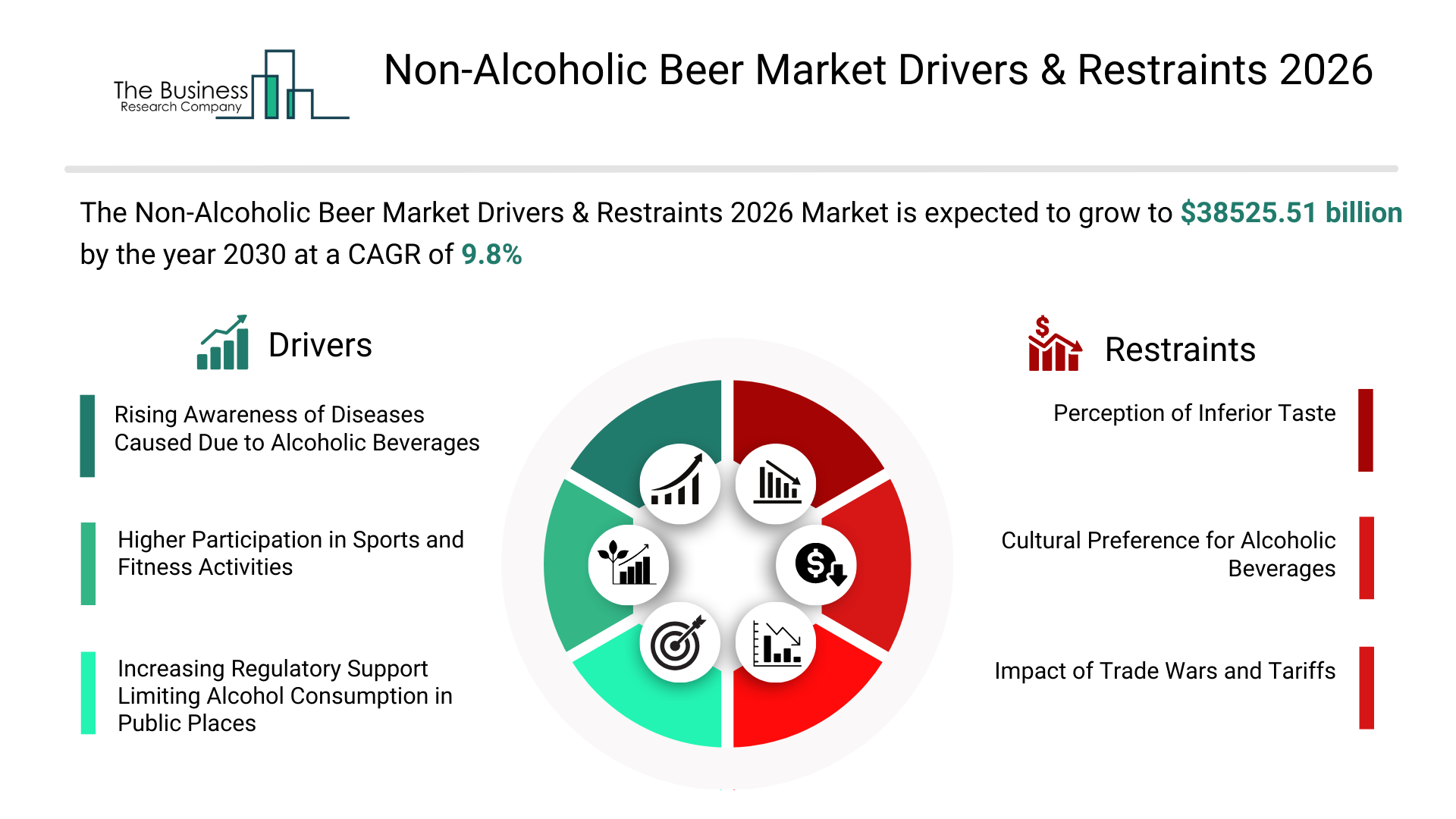
The rapid growth of the global non-alcoholic beer market leading up to 2030 will be driven by the following key factors that are expected to reshape mainstream drinking occasions, beer portfolio strategies, and brewery production playbooks worldwide.
Rising Awareness Of Diseases Causes Due To Alcoholic Beverages - The rising awareness of diseases causes due to alcoholic beverages will become a key driver of growth in the non-alcoholic beer market by 2030. As scientific evidence and public health communication increasingly emphasize the association between alcohol intake and serious health conditions such as cancer, liver disease, and cardiovascular disorders, consumers are expected to become more cautious about regular alcohol consumption. This growing awareness is likely to reinforce long-term behavioral shifts toward alcohol moderation rather than complete abstinence, particularly among health-conscious and preventive-care-oriented consumers. As a result, demand for alternatives that allow participation in social and recreational drinking occasions without the health risks associated with alcohol is expected to rise. As consumers increasingly seek beverages that align with healthier lifestyle choices and risk-reduction strategies, the adoption of non-alcoholic beer is expected to accelerate. As a result, the rising awareness of diseases causes due to alcoholic beverages is anticipated to contributing to a 2.0% annual growth in the market.
Higher Participation In Sports And Fitness Activities - The higher participation in sports and fitness activities will emerge as a major factor driving the expansion of the market by 2030. As increasing numbers of individuals adopt physically active lifestyles and integrate regular exercise into their daily routines, preferences are expected to shift toward beverages that align with fitness, recovery, and overall wellness objectives. The growing emphasis on sports participation, recreational fitness, and structured physical activity is expected to influence consumption patterns, particularly around post-workout and social recovery occasions where alcohol intake is increasingly viewed as counterproductive. As more consumers seek hydration-oriented, low-calorie, and alcohol-free alternatives that complement active lifestyles while still offering familiar taste and social appeal, non-alcoholic beer is expected to gain wider acceptance. As participation in sports and fitness activities continues to rise across age groups and regions, there will be a greater opportunity for non-alcoholic beer products to position themselves as compatible with performance-focused and health-conscious consumption. Consequently, the higher participation in sports and fitness activities is projected to contributing to a 1.3% annual growth in the market.
Increasing Regulatory Support Limiting Alcohol Consumption In Public Places – The increasing regulatory support limiting alcohol consumption in public places will serve as a key growth catalyst for the market by 2030, Biopharmaceutical products such as recombinant proteins, biosimilars, vaccines, enzymes, and fermentation-derived small molecules increasingly form the backbone of modern therapeutic pipelines. As governments and public authorities continue to implement stricter regulations on alcohol consumption in public spaces such as parks, streets, sporting venues, and areas near educational institutions, opportunities for consuming traditional alcoholic beverages are expected to become more restricted. These regulatory measures are designed to curb harmful drinking behaviors, improve public safety, and reduce alcohol-related social and health risks, thereby encouraging consumers to seek compliant alternatives. As alcohol-free beverages are permitted in a wider range of public and social settings, non-alcoholic beer is expected to gain stronger acceptance as a suitable substitute that allows social participation without regulatory constraints. As regulatory frameworks continue to evolve and enforcement of public alcohol restrictions intensifies, there will be a greater shift toward non-alcoholic beer options. Therefore, this increasing regulatory support limiting alcohol consumption in public places projected to supporting to a 1.0% annual growth in the market.
Expanding E-Commerce - The expanding e-commerce will become a significant driver contributing to the growth of the market by 2030. As digital retail infrastructure continues to strengthen globally and consumers increasingly adopt online shopping for food and beverages, the accessibility and visibility of non-alcoholic beer products are expected to increase significantly. The continued expansion of e-commerce platforms, direct-to-consumer channels, and last-mile delivery networks is enabling beverage brands to reach a wider consumer base beyond traditional retail formats, particularly in urban and digitally connected regions. As online channels offer greater product variety, convenience, and targeted marketing capabilities, non-alcoholic beer producers are expected to leverage these platforms to engage health-conscious and convenience-oriented consumers more effectively. As companies scale their digital distribution strategies and e-commerce becomes a more integral part of beverage purchasing behavior, there will be a greater opportunity for non-alcoholic beer brands to expand market penetration, improve customer reach, and drive sustained sales growth. Consequently, the expanding e-commerce is projected to contributing to a 0.5% annual growth in the market.
Access the detailed Non-Alcoholic Beer Market report here:
https://www.thebusinessresearchcompany.com/report/nonalcoholic-beer-global-market-report?utm_source=EINPresswire&utm_medium=Paid&utm_campaign=Mar_PR
What Are The Key Growth Opportunities In The Non-Alcoholic Beer Market in 2030?
The most significant growth opportunities are anticipated in the alcohol-free beer market, store-based the non-alcoholic beer market, the malted grains non-alcoholic beer market, and the flavored non-alcoholic beer market. Collectively, these segments are projected to contribute over $41 billion in market value by 2030, driven by rising health and moderation focused consumption, expanding store based retail availability and shelf visibility, and continuous product innovation in taste, brewing methods and flavor extensions that increase trial and repeat purchase across more drinking occasions. This surge reflects the accelerating consumer shift toward low and no alcohol choices, enabling brands and retailers to scale variety, improve quality perception, and fuel transformative growth within the broader non-alcoholic beer industry.
The alcohol-free beer market is projected to grow by $12,328 million, the store-based non-alcoholic beer market by $10,267 million, the malted grains non-alcoholic beer market by $9,090 million and the flavored non-alcoholic beer market by $9,006 million., and over the next five years from 2025 to 2030.
The Business Research Company (www.thebusinessresearchcompany.com) is a leading market intelligence firm renowned for its expertise in company, market, and consumer research. We have published over 17,500 reports across 27 industries and 60+ geographies. Our research is powered by 1,500,000 datasets, extensive secondary research, and exclusive insights from interviews with industry leaders.
We provide continuous and custom research services, offering a range of specialized packages tailored to your needs, including Market Entry Research Package, Competitor Tracking Package, Supplier & Distributor Package and much more
Disclaimer: Please note that the findings, conclusions and recommendations that TBRC Business Research Pvt Ltd delivers are based on information gathered in good faith from both primary and secondary sources, whose accuracy we are not always in a position to guarantee. As such TBRC Business Research Pvt Ltd can accept no liability whatever for actions taken based on any information that may subsequently prove to be incorrect. Analysis and findings included in TBRC reports and presentations are our estimates, opinions and are not intended as statements of fact or investment guidance.
The Business Research Company
Americas +1 310-496-7795
Europe +44 7882 955267
Asia & Others +44 7882 955267 & +91 8897263534
Email: info@tbrc.info
Oliver Guirdham
The Business Research Company
+44 7882 955267
info@tbrc.info
Visit us on social media:
LinkedIn
Facebook
X
Legal Disclaimer:
EIN Presswire provides this news content "as is" without warranty of any kind. We do not accept any responsibility or liability for the accuracy, content, images, videos, licenses, completeness, legality, or reliability of the information contained in this article. If you have any complaints or copyright issues related to this article, kindly contact the author above.
